What are freight forwarding services, what is the essence of freight forwarding and who is responsible for logistics? In simple terms from TVL experts.
Who is a freight forwarder and what does he do?
Transport and forwarding services (TFS) are a number of logistics operations related to the organization, support and control of cargo delivery from the sender to the final recipient. In other words, the freight forwarder organizes transportation: he may not always be the owner of the transport, but is responsible for the timely delivery of cargo in compliance with all procedures.
What is the role of the freight forwarder? He is an intermediary between the customer and all participants in the logistics chain: carriers, warehouses, customs and insurance companies. And his task is to organize this in such a way as to ensure a guaranteed result.
What is included in freight forwarding services
Depending on the contract and the needs of the client, freight forwarding services include:
- route planning taking into account the timing, cost and conditions of the cargo;
- selection of transport;
- preparation of documents required for the legal transportation of goods;
- customs clearance – if the cargo crosses the border, the forwarder will arrange customs clearance;
- cargo insurance against financial risks in case of damage, loss or force majeure;
- Thus, the forwarder controls the entire logistics to the destination.
What types of forwarding services are there
Forwarding services include various types of transport and delivery methods, differ in scale, level of complexity and geography.
For example, by the type of transportation, they are divided into:
- domestic freight forwarding – delivery within the country;
- international – transportation between countries with all customs procedures;
- multimodal (combined) – this is when one cargo is delivered by several types of transport under the responsibility of one forwarder;
- intermodal – here several carriers are involved, and the cargo is transported in one container;
- air forwarding – escort of urgent cargo by aircraft.
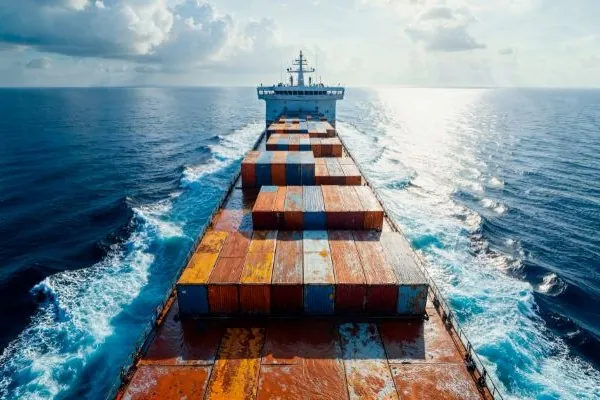
- sea – delivery of goods by sea;
- railway is most often used for bulk cargo.
According to the level of service, there are basic services (delivery of transport, registration of consignment notes and cargo escort), complex (3PL) with full logistics support and 4PL with full transfer of logistics under the management of the forwarder.
According to the specifics of the cargo, there are:
- regular forwarding (cargo without special conditions),
- dangerous goods,
- temperature – using refrigerators and isothermal vans,
- oversized forwarding with cargo escort,
- valuable cargo is transported with security and special control.
Forwarding of road cargo
This is the most universal and popular type of logistics, which is used both within the country and over short international distances. They provide door-to-door delivery, high speed of cargo processing and are suitable for consolidated, partial and full cargo.
International forwarding
This is a somewhat more complex process that requires not only the organization of transportation itself, but also knowledge and understanding of the sphere of customs legislation, licenses, certificates and international law.
There are the following types of transportation:
- international road – most often from the EU, Turkey, Moldova;
- maritime container – from China, USA, South Korea;
- air – for urgent or valuable transportation;
- railway – from the East in the format of container routes.
Here it is important to control the legal correctness of the paperwork, since the fines will be high. A multimodal transportation scheme is often used: say, by sea to the port of Romania, and then by car to Kyiv.
Warehouse and related services
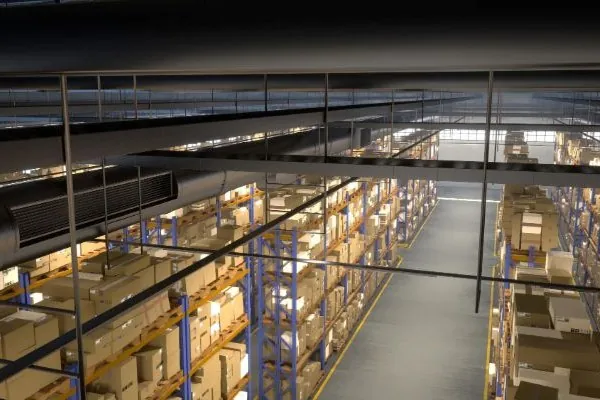
High-quality freight forwarding is not limited to transportation alone. Now companies provide a full range of logistics services, which include temporary storage of cargo, cross-docking (prompt reloading of goods from one vehicle to another without long-term storage), warehousing under customs control for goods that have not yet passed customs clearance, fulfillment (picking, packaging, marking of goods before sending to the end customer). As well as a photo report or video recording of loading, consolidation of groupage cargo. Advantages of professional freight forwarding
- Saving your own time and effort: all issues are resolved by a specialist who is well versed in this matter. You do not need to look for transport, draw up documents and resolve other logistics issues.
- Minimization of risks: the forwarder is responsible for transportation and controls the entire process.
- Financial transparency: the tariff is discussed in advance, and therefore there will be no unpleasant “surprises” later.
- Flexibility and scale: you can transport various volumes and adapt logistics to seasonal or one-time needs.
- The forwarder coordinates interaction with carriers, customs, warehouses, insurance companies.
How to choose a reliable freight forwarder
- Be sure to research the experience and reputation of the company, ask for cases or examples of similar transportation, read customer reviews, inquire about partners.
- Check the documents, the forwarder must have licenses, liability insurance, accreditations.
- Assess the international presence of the company: are there partners and an office abroad – this is an advantage in international logistics.
- Ask how open the company is to communication: does it provide reporting, cargo tracking, does it fix prices in writing …
- The presence of warehouses, brokers is an advantage.
- Be sure to conclude a written agreement with a clear definition of the obligations of the parties, force majeure and compensation.
The transport forwarder is responsible for organizing the transportation of goods, choosing the optimal route and monitoring all stages of delivery.