Bonded warehouse, fulfillment and cross-docking are modern logistics solutions that help businesses effectively organize the storage, processing and delivery of goods. Let’s consider what their features, advantages and when it is advisable to use each of them.
What is a bonded warehouse and what are its functions
A bonded warehouse is a specially equipped place or premises where goods are stored under customs control without paying customs duties or until customs clearance is completed.
The main functions of a bonded warehouse:
- storage of goods;
- deferral of payment of customs duties;
- consolidation and distribution of cargo;
- preparation of goods for sale or transportation;
- ensuring customs control;
- optimization of foreign economic activity.
Fulfillment for business: how a logistics warehouse works
The functions of a logistics warehouse vary depending on where it is located in the logistics chain:
- manufacturer’s finished goods warehouses – here, warehousing, storage, sub-sorting or additional processing of products before shipment, labeling, preparation for loading and cargo operations are carried out;
- logistics warehouses of raw materials at consumers – they receive products, unload, sort, store and prepare them for production consumption;
- wholesale intermediary warehouses – ensure the concentration of goods, assembly in the required assortment, organize delivery in small batches both to consumer enterprises and to the warehouses of other wholesale companies, store reserve batches;
- trade warehouses at points of consumption – receive goods from the production range and, forming a wide trade assortment, supply them to retail enterprises.
Thus, the logistics warehouse is transformed from a simple “storage” into an active tool that forms the flow of goods in the right volume, assortment and at the right time – this is what makes it an integral part of the logistics chain, which is also directly affected by the fulfillment described above.
Cross-docking in logistics: features and advantages
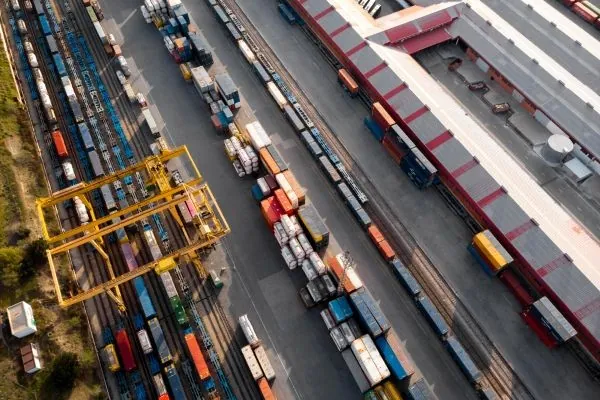
In a typical cross-docking operation, incoming goods are unloaded from arriving trucks, sorted and consolidated according to their destinations, and then immediately reloaded onto delivery trucks.
Speed is key here: this entire process usually takes place within 24 hours, often in just a few hours, which minimizes the time that products spend in the distribution center.
Advantages of cross-docking among logistics services:
- reduced warehousing costs;
- faster delivery;
- better inventory management;
- lower personnel costs;
- better vehicle filling;
- supply chain sustainability.
To effectively implement cross-docking, it is important to use high technologies and warehouse management systems, as well as to organize clear and understandable processes. That is why it is worth contacting professionals from logistics companies.
What is the difference between open warehouses and closed warehouses
There are different types of bonded warehouses: open warehouses and closed warehouses.
| Open warehouse | Closed warehouse |
| Available for storing goods of any person. | Intended only for the goods of the warehouse owner. |
| Storage services are provided to other enterprises or individuals. | Does not provide services to third parties. |
| Used as a commercial warehouse for a wide range of clients. | Used by the enterprise exclusively for its own needs. |
| The owner is responsible for storing goods of various clients and compliance with customs requirements. | The owner is responsible only for his own goods. |
In short: an open warehouse is for all users who need bonded warehouse services. Closed warehouses are only for the warehouse owner and his goods.
What logistics services are needed for international trade
To carry out international trade, enterprises need the following logistics services:
- international transport services;
- customs brokerage services;
- warehousing services;
- insurance;
- information and logistics services;
- packaging;
- labeling;
- fulfillment;
- cross docking.
Accordingly, logistics fully ensures the effective movement of goods from the manufacturer to the end consumer.
How to choose a logistics warehouse for business
When choosing a logistics warehouse for business, several key criteria must be taken into account:
- location (warehouse Kyiv);
- type of warehouse (customs warehouse or regular);
- area and capacity;
- technical equipment;
- list of services (for example, whether they perform storage, packaging and sorting);
- operator reliability (work experience and reputation).
A correctly selected logistics warehouse helps reduce costs, speed up the delivery of goods, ensure their proper storage and increase the efficiency of the enterprise.
Customs Services and Warehouse Logistics
Customs services ensure the legal and correct clearance of goods during international transportation, while warehouse logistics is responsible for their reception, storage, processing and shipment. Together they form a single logistics chain that allows businesses to smoothly conduct international trade, optimize costs and deliver products to consumers on time.
That is, a professional approach to both aspects allows businesses to reduce transportation and warehousing costs, as well as speed up the delivery of goods.
When a business needs fulfillment and when cross-docking
Fulfillment and cross-docking are different logistics models that are used depending on the needs of the business.
| Fulfillment | Cross-docking |
| Involves storing goods in a warehouse. | Practically does not involve storing goods. |
| Suitable for online trading and fulfilling individual orders. | Suitable for rapid distribution of large batches of goods. |
| Includes storage, picking, packaging and delivery. | Includes receiving, sorting and immediate shipment. |
| Helps process many small orders. | Helps reduce delivery time and warehousing costs. |
If a business needs to store goods and process individual orders, it is worth using fulfillment. And if the main goal is to move the goods from the supplier to the buyer or the retail network as quickly as possible without storage, it is more expedient to use cross-docking.
Conclusion
The choice of a suitable logistics solution depends on the specifics of the business, the type of goods and the delivery format. To ensure efficient transportation, customs clearance and warehouse processing of goods, it is advisable to entrust these processes to an international transport and logistics company with a comprehensive approach to organizing transportation.