Find out what a customs warehouse is, how the temporary storage regime and customs-licensed warehouse work, who benefits from it and how to place cargo with the support of TVL
Businessmen often face a difficult choice: to import goods into the country and immediately pay taxes or wait for a higher price and better sales conditions. In this case, the services of a customs warehouse will be useful – it helps to optimize costs and maintain financial flexibility.
What is a customs warehouse?
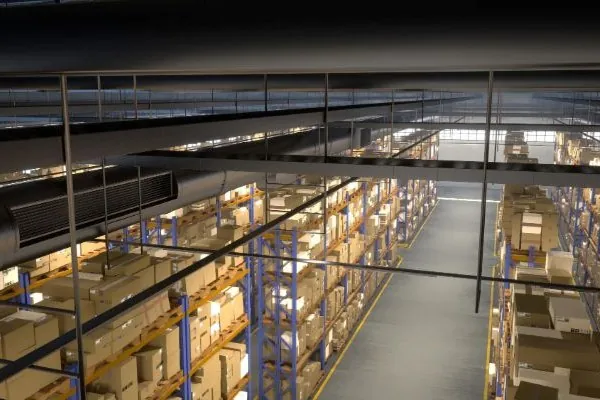
The Customs Code defines a temporary storage warehouse as a specially equipped place for placing goods until customs clearance. That is, this is a customs regime that makes it possible to store foreign goods under the supervision of customs authorities without paying customs duties and taxes until they are released into free circulation or sent back abroad. Simply put: this is a special room or territory with the status of “zone under customs control”.
It can be closed – when formed for the needs of a particular company; and open – is in the public domain for many clients.
The warehouse is convenient because it can be used to store both imported goods and those that are exported. For example, this helps in cases where a company is preparing a large batch of goods for shipment, but for certain reasons it is delayed in Ukraine. That is, it allows the business to gain some time and properly plan further financial and logistical steps.
How does a customs warehouse work?
The mechanism of operation is as follows:
- The cargo arrives in the country and is sent to the customs warehouse. The customs declaration is submitted in the “customs warehouse” mode.
- The customs authorities check the documents and, if necessary, inspect the goods. Officially, they are considered to be in Ukraine, but not put into circulation.
- The cargo can be stored in the warehouse for a long time. In Ukraine, for example, up to 1095 days, taking into account certain nuances. At the same time, the warehouse must be equipped in accordance with certain requirements, with optimal temperature and humidity indicators, security, video surveillance, and a fire extinguishing system.
What can be done in a customs warehouse?
Unpack and repack goods.
- Label.
- Sort, form batches for specific orders.
- Take inventory.
As you can see, this is a very convenient tool that can help you solve many issues.
Who can use the customs warehouse service
- Almost all participants in foreign economic activity.
- Importers who bring goods from abroad and do not want to immediately pay duties and taxes.
- Exporters, that is, domestic manufacturers who prepare goods for export. They leave the products in the customs warehouse until shipment, until the contract is concluded and the transport is delivered.
- For distributors and retail chains that work with large volumes and different suppliers, the customs warehouse provides many preferences: combine cargo, sort it and prepare it for further transport operations. For logistics and 3PL operators, this is an important element of the turnkey service for clients.
- It is important that a customs warehouse is also available for small and medium-sized businesses, because small companies can also use an open customs warehouse by renting the required area.
So, as you can see, this is a very convenient option for all businessmen.
How to arrange the placement of goods in a customs warehouse
First, you should choose a customs licensed warehouse that will meet all your requirements: location (the presence of a port, border, airport nearby) and compliance with the necessary conditions for temperature control, security, etc.
- The next step is to submit a customs declaration in the “customs warehouse” mode. Documents for the cargo are attached here: packing lists, invoices, bills of lading, certificates if necessary.
- Customs checks the documents, can inspect or scan the cargo. And only after these procedures is it officially placed in the customs warehouse.
- There, strict accounting of goods is maintained, and the owner or authorized broker has access to reports on balances, shelf life.
Customs clearance or export after the company decides to release the goods into free circulation. At this stage, a new customs declaration is drawn up with the calculation of payments. If the goods are sent for export, then a re-export declaration is drawn up.
Conclusion: does your business need a customs warehouse
A customs warehouse is, of course, a very convenient tool for managing finances, inventory and international logistics, because it is not only a place to store goods. But does everyone need it?
It will definitely be useful if:
- you import goods in large quantities, but do not sell everything at once;
- you deal with seasonal goods;
- you are engaged in distribution and work with clients from different regions or countries;
- you export and want to have a place to consolidate cargo before sending it abroad.
Customs warehouses are not your option if:
- you deal with small batches, and they quickly
- are being implemented;
- the products are perishable and cannot be stored for a long time;
- your company does not carry out foreign economic activity on a regular basis.
- If you need a customs warehouse, Kyiv offers several modern solutions for business.