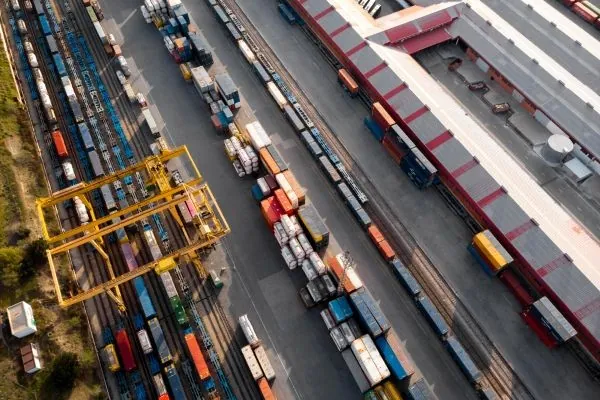
The trend of increasing container transportation costs continues due to global challenges on short transportation routes and rising operating costs. This negative trend is of concern to logistics companies and businesses that conduct international trade operations. The key drivers of container transportation price increases are related to changes in product and commodity demand, existing supply chain challenges, and regional and global economic conditions. The real negative effects affecting the demand and profitability of the business are manifested due to changes in ship routes, port congestion and higher operating costs.
Factors affecting the rising cost of container transportation
After the COVID-19 pandemic, 2023 saw a significant revival in global trade using containers to deliver goods. But since the beginning of 2024, negative pressures have already manifested themselves, leading to a noticeable increase in costs when calculating the cost of containerized transportation. The main factors that are driving up costs include:
- Increased delivery times.
- Container shortages.
- Higher fuel costs.
- Congestion at ports.
- Changes in demand.
Container shipping costs are rising due to hazards to shipping in the Red Sea. This has led to a drastic reduction in transit through the Suez Canal. Therefore, container ship traffic diverted around the Cape of Good Hope has increased delivery time and ship fuel costs, insurance premiums. An equally important factor is the announced increase in tariffs on imported cargo in the US. Owners and buyers are in a hurry to bring in goods before they go into effect.
All this automatically provoked the shortage of containers in trade turnover against the background of rising fuel prices in the energy markets and changes in ship schedules. Container transportation prices increased due to the transfer of container ship traffic to bypass the Panama and Suez Canals. As a result, infrastructure and equipment in the ports of many countries has been overloaded.
This leads to longer waiting times for cargo and idle containers in terminals against the background of growing demand and prices for cargo transshipment services. Dynamic changes in demand due to the rapid development of online commerce and variations in the volume of related cargo flows add to the challenges for carriers and logistics firms.
How businesses can reduce container transportation costs
Goods owners are undoubtedly interested in reducing overhead costs in freight supply chains, which increases business profitability. Reducing the price of container transportation is facilitated by planning logistics in advance. In this can help in-demand logistics companies that have practical experience in successfully minimizing the costs of cargo owners. For this purpose, they can offer, for example:
- multivariate logistics planning;
- utilization of alternative routes;
- conclusion of long-term contracts with carriers;
- a variety of multimodal transportation schemes.
Flexible logistics solutions can ensure timely and affordable container transportation. Layout and planning of several possible route variants contributes to diversification of transportation risks and thus to cost reduction. Interaction with trusted carriers on the basis of long-term contracts guarantees the reduction of overhead costs, expands the ability of transport companies to make timely operational decisions in the interests of customers.
Container transportation prices in Ukraine are largely determined by the forecasts and dynamics of the multi-year military conflict with rf. Reduction of business expenses on import and export of goods provides the use of multimodal transportation schemes. In Ukraine, they start and end with the use of rail and road transportation. Outside its territory, there are all possibilities to attract any logistic resources to reduce the cost of containerized cargo transportation.
Forecasts and the future of container transportation
The world economy and global containerized cargo transportation are in a period of uncertainty due to the manifestation and influence of many significant factors, both negative and positive. The universal usability of containers is becoming increasingly popular. The advantage is that they can be transported by sea, road, air and rail.
In the forecasts of leading expert organizations announced various expectations regarding the change in the cost of container transportation in the world and Ukraine in the coming years. Great hopes are pinned on the resumption of safe navigation through the Suez Canal, development of new technologies in logistics of transshipment and delivery of cargoes in standard containers.
Logistics companies that are actively working and have won the trust of business are able to offer alternative competitive solutions to reduce costs at all stages of commodity deliveries. However, all of them will be realized in the emerging financial and economic realities of the global and regional economy. It largely depends on the dynamics of the level of armed confrontation in regional conflicts in the territories important for transit and cargo delivery.