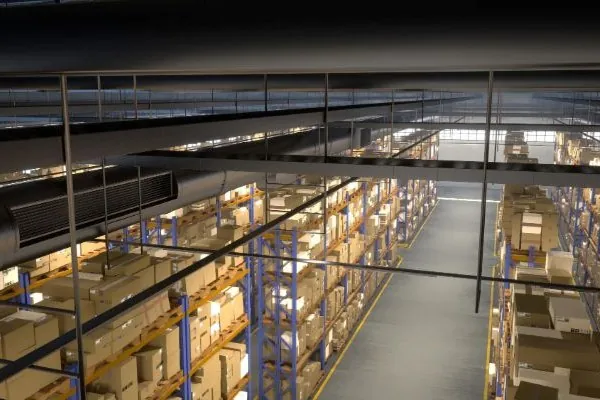
Modern Ukrainian businesses are increasingly moving online. Online stores, marketplaces, and small brands working directly with consumers require not only high-quality products but also convenient, well-thought-out logistics. Customers want to receive their orders quickly, in good condition, and with tracking capabilities. This is where fulfillment comes in – a service that allows companies to delegate the processes of storing, packaging, and delivering orders to professional operators.
Many entrepreneurs wonder: what is fulfillment? Ukrainian businessmen are increasingly debating whether it is truly necessary and what are its prospects in Ukraine? Let’s explore these questions in more detail in our article. We’ll discuss whether such warehousing services are necessary for your business and what their advantages and disadvantages are. This information will allow you to weigh the pros and cons and make an informed decision.
What is fulfillment: concept and essence
The term “fulfillment” comes from English and means “execution” or “completion of a process.” In a business context, fulfillment, simply put, is a set of logistics services covering all stages of product handling: from its arrival at the warehouse to delivery to the end customer (consumer).
The concept and essence of this type of warehouse service boils down to the fact that businesses no longer need to independently handle product storage, inventory, packaging, parcel formation, and interaction with courier services. All these tasks are handled by a specialized fulfillment operator. This allows entrepreneurs to focus on brand development, marketing, and customer service without wasting time on routine warehouse processes.
How does order processing and delivery work?
To understand how fulfillment works, it’s important to consider the sequence of actions typical of this service. The service is organized to simplify business operations as much as possible, ensure fast delivery, and high-quality customer service. The entire logic is built on a combination of warehouse technologies, automation, and coordinated staff work.
In most cases, order processing consists of several key stages:
- Inventory acceptance. When a company transfers its products to the fulfillment center, they undergo a mandatory inspection: quantity, condition, and packaging integrity. This helps avoid mix-ups and quickly identify defects. The goods are then placed in the warehouse in special cells or areas that meet storage requirements (temperature, humidity, and safety).
- Systematization and accounting. All products are entered into a specialized electronic system, where each item has its own unique code. This ensures complete control over inventory and allows the business owner to check up-to-date information at any time. Modern fulfillment operators for online stores integrate their systems with companies and marketplaces. As soon as a customer places an order, it is automatically entered into the database for processing.
- Order picking. Warehouse employees are tasked with assembling specific items for delivery to the customer. This could be a single item or several different products. Barcode scanners and optimized warehouse flow routes are used to speed up the process.
- Packaging. It’s important not only to include the right products, but also to do so in a high-quality and attractive manner. Many companies use fulfillment services to brand boxes, include promotional materials, or gifts. This creates a positive customer experience.
- Order transfer for delivery. Fulfillment services in the merchandise business can partner with several courier services (Nova Poshta, Ukrposhta, and international carriers). This allows customers to choose the most convenient delivery method based on their preferences.
- Returns. If the customer decides to cancel the order or the product is unsuitable, the operator accepts the return, re-checks the product, and returns it to the warehouse. This is especially important for online stores, as returns are common practice in e-commerce.
Each of these steps can be performed separately or in combination, depending on the customer’s needs. Thus, fulfillment for stores is a comprehensive process where every detail matters. This provides businesses with control, transparency, and reliability, while customers receive fast, high-quality delivery.
Main Order Fulfillment Formats and Models in Ukraine
The logistics market in Ukraine is rapidly developing, and warehouse services are already offered in several formats. The main fulfillment models offered in Ukraine are:
- Traditional fulfillment center. A full-fledged service where goods are stored, packaged, and shipped.
- Marketplace service. When the operator works directly with trading platforms, such as Rozetka, Prom, and Amazon, integrating and managing all processes. Microfulfillment. A format for small businesses, where warehouses are.
- Space and order processing are minimal, yet flexible.
- A specialized service for specific niches: cosmetics, clothing, and food with temperature control.
Fulfillment warehouse with cross-docking. When goods are practically not stored, but quickly sorted and redirected to customers. - These formats allow businesses to choose the optimal solution based on budget, sales volume, and customer requirements.
Advantages and Disadvantages of Fulfillment
Fulfillment is a powerful tool for any product-based business. However, like any other service, it has its strengths and weaknesses. Let’s take a closer look to understand why some companies actively use it, while others remain committed to their own logistics.
Advantages of Fulfillment:
- Time savings. Businesses don’t waste expensive time on packaging or negotiating with courier services. This is especially advantageous for small brands where the owner plays multiple roles.
- Scalability. If an online store starts receiving 3-5 times more orders, this type of warehouse service can easily handle the workload. The entrepreneur doesn’t need to rent new warehouse space or hire additional staff.
- Professional packaging and modern technology are available. Operators are experienced in protecting goods from damage and ensure fast sorting. Integration with marketplaces and CRM systems enables automated order processing.
- Improved service for the end consumer. Fast delivery, high-quality branded packaging, and the ability to track parcels online create a positive experience and encourage repeat purchases.
- However, fulfillment services also have their drawbacks. The first is cost. For small businesses, the costs of this service may seem high, especially in the early stages when the number of orders is still small.
- The second issue is dependence on the partner. Choosing an unreliable operator risks delays, errors, or even lost goods. This can negatively impact the store’s reputation.
- Another disadvantage for some entrepreneurs is the reduced control over business processes. When goods are stored not in their own warehouse but at a partner’s, the entrepreneur must rely on third-party accounting systems.
- Finally, not all operators are prepared to handle non-standard goods. For example, products requiring special storage conditions may require a specialized warehouse, which is not always available.
Therefore, before outsourcing logistics, it is important to weigh the pros and cons. The choice always depends on the business size, budget, and strategic goals of the company.
Fulfillment Market and Prospects in Ukraine
The demand for professional logistics services in Ukraine is growing every year. The development of e-commerce, marketplaces, and express delivery is encouraging businesses to outsource warehouse processes to professionals.
Experts predict that in the coming years:
- new micro-warehouse formats will emerge in major Ukrainian cities;
- demand for temperature-controlled warehouses (with refrigeration and freezing chambers) will grow;
- Integration with marketplaces and process automation will become standard;
- Competition will reduce the cost of services and make them accessible to small businesses.
Therefore, a fulfillment warehouse is becoming a strategic development area for companies planning to grow and scale.
How to choose an e-commerce logistics operator
Choosing a reliable partner is critical to the success of an online business. Before signing a contract, consider several factors.
Key selection criteria:
- the operator’s reputation and experience in the market;
- availability of a modern fulfillment center and appropriate equipment;
- flexible pricing and transparent terms of cooperation;
- the ability to integrate with your CMS, CRM, or marketplaces;
- packaging quality and order processing speed;
- support for various delivery services and shipping options;
- additional services: box branding, returns management, call center.
Choosing the right operator will help you avoid logistics issues and focus on sales development.
Conclusion
Having understood how fulfillment works, we can confidently say that it’s more than just a modern logistics solution. It’s a complete ecosystem that integrates warehouse, packaging, and delivery into a single process. For online stores, this allows them to outsource routine tasks to professionals and focus on marketing and sales.
In today’s world, speed and quality of customer service determine business success. And fulfillment is precisely what can deliver these benefits, becoming a key element in the development of e-commerce in Ukraine.