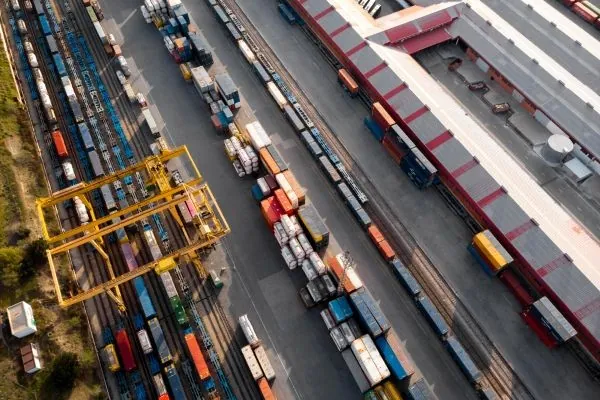
Multimodal transportation of goods plays a key role in international logistics as it provides flexibility, efficiency and reliability of cargo delivery on a global level. Modern supply chains often involve several countries, which requires the integration of different modes of transportation (sea, rail, road, air). Multimodal transportation facilitates the interaction between these modes of transportation, speeding up the delivery of goods.
What is multimodal transportation
Multimodal transportation is the transportation of any category of goods by two or more modes of transport, within the framework of one contract organized by one logistics company. In multimodal transportation, the cargo is moved from one mode of transportation to another, usually in special terminals or warehouses, to continue its journey. Multimodal transportation requires careful planning and coordination of all stages of delivery to ensure a smooth process. This includes selecting the most optimal routes, identifying suitable modes of transportation, and coordinating the timing of the transition from one mode of transportation to another.
The benefits of multimodal logistics include:
- Optimization of transportation costs;
- increased speed and flexibility of delivery;
- global coverage of regions;
- risk reduction and supply chain resilience;
- simplification of international procedures;
- efficient use of infrastructure.
There is another type of transportation that uses multiple modes of transportation – intermodal. Despite the apparent similarity of these modes of transportation, there are a number of significant differences. Thus, intermodal freight transportation is carried out by different logistics companies, using several means of transportation. The client concludes several contracts with transportation companies, each of which is responsible for its own stage of transportation. In multimodal deliveries in the process of transportation involves several modes of transport, but only one company, at all stages of transportation fully responsible for the safety and timely delivery of cargo to the destination.
Main types of multimodal transportation
The main types of multimodal transportation are classified depending on the combinations of modes of transportation used. Each of them can be considered as suitable for certain types of cargo, distances and delivery conditions. The most commonly used are:
- Road and rail transportation. The cargo is transported by rail to the destination station and then by road to the customer. This method can be used when delivering industrial materials to the regions. The advantages of this method of transportation are high load capacity and low costs of rail transport, flexibility of road transport at the “last mile”.
- Air and road transportation. Cargo is delivered by air transport to the airport, then by road transport to the final point. Among its pros is the speed of transportation. Suitable for urgent and expensive goods (electronics, medicines), for example, this is how components are delivered from the U.S. to Europe for assembly plants.
- Sea and rail transportation. Cargo transportation is carried out by sea to the port, then reloaded onto railroad platforms. Among the advantages of such delivery are cost-effectiveness and environmental friendliness over long distances. It is well suited for bulk cargoes such as oil, coal, containers.
In addition to international multimodal transportation, there are also domestic ones. For example, by river and road transportation. This is how large volumes of cargo are usually transported. This method is economical for delivery of construction materials along rivers to remote regions.
The choice of the type of multimodal transportation and logistics depends on the nature of the cargo (volume, weight, safety requirements), distance and geographical location of the points of shipment and delivery, as well as priorities in terms of time and cost.
Benefits of multimodal transportation for business
Multimodal transportation, which is carried out by logistics companies in the interests of business, is advantageous and effective in terms of increasing speed, guaranteeing safety and reducing transportation costs. Logistics companies with extensive experience in this area, work out the optimal routes, choose the most effective and suitable for this category of cargo options symbiosis of vehicles, unloading and loading points with the necessary equipment for the transshipment of this product.
This applies to all types of delivery, including container multimodal transportation. Timely correct preparation of necessary documents significantly reduces time costs associated with downtime due to errors or lack of necessary papers. Development of routes taking into account the condition of roads, knowledge of the nuances of sea and air ports and other nuances of movement, allows timely response to possible obstacles and prompt replacement. Such flexibility in transportation allows us to guarantee compliance with delivery deadlines and other terms of the contract with the client.